Fibroblast Skin Tightening: How It Works, Who It May Suit and What to Consider

Could a treatment described as a “non-surgical lift” be the wrong choice if you haven’t considered recovery and skin suitability? With fibroblast skin tightening, plasma creates controlled micro-trauma at the skin’s surface. Healing may involve redness, swelling and small scabs, so it’s worth understanding the process rather than relying on a promise of tighter-looking skin.
If you’re comparing plasma fibroblast with other skin-tightening options, or concerned about visible downtime, those are useful questions to raise with a practitioner. This guide explains how the treatment works, which concerns may prompt people to ask about it and what to discuss before deciding. It also covers suitability, aftercare and alternatives such as XERF™, Morpheus8 and Ultraformer MPT, which use different technologies.
Results and recovery can vary, and fibroblast treatment isn’t appropriate for everyone. Understanding the trade-offs can help you decide what to discuss with a practitioner in New South Wales.
Key Takeaways
- Fibroblast skin tightening uses plasma technology to address selected skin laxity concerns, but it isn’t a guaranteed lift.
- Ask what each stage involves, what recovery may look like and which aftercare instructions will apply to you.
- Suitability depends on your skin and goals. Rely on an individual assessment, not a general checklist.
- Compare options by your concern, the treatment approach, recovery expectations and the practitioner’s recommendation.
- Cosmetic Wellness offers Plasma Fibroblast and other skin-tightening options at its Sydney clinics. Confirm treatment availability at your preferred location.
What is fibroblast skin tightening, and what does the treatment aim to address?
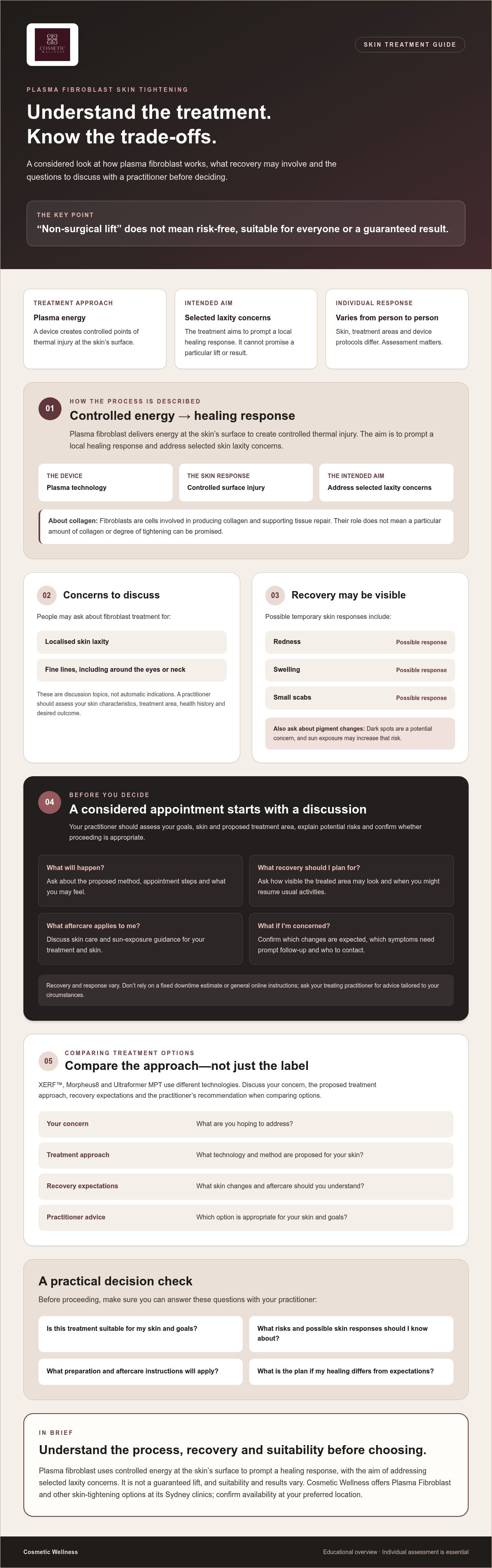
Plasma fibroblast is a cosmetic procedure that uses a plasma device to create controlled points of thermal injury at the skin’s surface. The aim is to prompt a local healing response and address selected skin laxity concerns. It’s sometimes described as non-surgical, but that doesn’t mean it’s risk-free or suitable for everyone.
The aim is to address an individual concern, not to guarantee a lift or a particular result. Skin, treatment areas and device protocols differ. A qualified practitioner should assess whether the treatment is appropriate for you and explain the proposed approach.
This video shows an example of fibroblast treatment being performed on the neck. It is for general information, not a guide to suitability or expected results.
How does plasma fibroblast treatment work?
The intended effect relies on a controlled skin response to energy delivered by the device. Fibroblasts are cells involved in producing collagen and supporting tissue repair. Their role doesn’t mean a particular amount of collagen or degree of tightening can be promised. Device settings and protocols vary, so ask the practitioner to explain the specific method proposed for your skin.
Which skin concerns may prompt people to ask about fibroblast treatment?
People may ask about fibroblast treatment for localised skin laxity or fine lines, including around the eyes or neck. These are topics for discussion, not automatic indications. The treatment area, skin characteristics, health history and desired outcome all need individual assessment before a practitioner can advise whether fibroblast skin tightening is appropriate.
In brief: Plasma fibroblast uses controlled energy at the skin’s surface to prompt a healing response, with the aim of addressing selected laxity concerns. Suitability and results vary from person to person.
What happens during fibroblast skin tightening, and what should you expect afterwards?
A considered appointment should begin with a discussion, not treatment. Before fibroblast skin tightening, the practitioner should assess your goals, skin and proposed treatment area, explain potential risks and confirm whether proceeding is appropriate. Ask the clinic to outline its preparation and appointment steps, as protocols can vary.
What may happen during a fibroblast appointment?
Your practitioner should explain the planned approach and what you may feel, then discuss any comfort measures available. If treatment proceeds, follow their directions throughout the appointment. Before leaving, make sure you understand the aftercare plan, which skin changes may occur and how to contact the clinic with concerns.
Cosmetic Wellness offers Plasma Fibroblast. Contact the clinic directly to confirm the appointment protocol and treatment availability at your preferred Sydney location.
What recovery questions should you ask before treatment?
Temporary redness, swelling and small scabs may occur after plasma fibroblast treatment. These are possible skin responses, not a guarantee of how your skin will react. Pigment changes, including dark spots, are also a potential concern, and sun exposure may increase that risk. Ask which effects are expected, which symptoms need prompt follow-up and what to do if your healing differs from the guidance provided.
Recovery and response can vary between individuals, so your practitioner should give you advice tailored to your treatment and skin. Before booking, clarify:
- How visible might the treated area look during recovery, and what should you plan for?
- What aftercare should you follow, including guidance about sun exposure and caring for the skin?
- When might you resume your usual activities, and are there any activities to avoid?
- What changes are expected, and who should you contact if you’re concerned?
Don’t rely on a fixed downtime estimate or general online instructions. Your treating practitioner can explain the likely recovery considerations for your proposed area and circumstances. A personalised treatment consultation can help you discuss these details before deciding.
Who may be suitable for fibroblast skin tightening, and what are its limitations?
A non-surgical approach isn’t automatically suitable for everyone. Whether fibroblast skin tightening is worth considering depends on an individual assessment of your skin, treatment area, health history and goals. A consultation should clarify potential benefits and limitations, not promise a particular result.
What should a practitioner assess before recommending treatment?
Be ready to explain what you’d like to address and what you’d consider a worthwhile outcome. Share relevant health history, current skin concerns and previous cosmetic procedures, including any treatments in the area you’re considering. This information helps the practitioner assess your circumstances and explain whether treatment may be appropriate, or whether another approach or further advice should be considered.
Ask how the practitioner determines suitability, which factors could affect the plan and what screening criteria apply. Don’t use a generic online checklist to decide whether treatment is safe for you. A recommendation should follow a qualified assessment and include clear guidance on risks, expected recovery and aftercare.
When might another skin-tightening approach be worth discussing?
The appropriate option depends on your concern, treatment area, goals and the practitioner’s assessment. Cosmetic Wellness also lists XERF, Morpheus8 and Ultraformer MPT. These use different technologies, so their names alone don’t tell you which is more suitable. Ask the practitioner to explain the proposed approach and how it may align with your priorities.
If you’re exploring XERF as a separate option, the Sydney XERF structural skin tightening guide provides further background. Use it to prepare questions, not as a substitute for personal advice.
Consider your expectations, too. A treatment may not deliver the degree or type of change you have in mind, and following practitioner-directed aftercare is part of making an informed decision. A personalised consultation can help you compare your goals with the available options. Discuss treatment suitability with Cosmetic Wellness.
How to explore fibroblast skin tightening with a Sydney clinic
Choosing a treatment is easier when the discussion starts with your concern and priorities, rather than a device name or a promise of a particular result. If you’re considering fibroblast skin tightening or another option, ask how the recommendation relates to the area you want addressed and what the experience may involve.
What should you ask when comparing fibroblast and other treatments?
Use these four points to guide the conversation:
- Concern: What specific change are you hoping to address, and is the treatment area appropriate to assess?
- Approach: Why is this technology being recommended for your concern? Cosmetic Wellness lists Plasma Fibroblast alongside XERF, Morpheus8 and Ultraformer MPT. These use different approaches, so ask how the proposed treatment fits your goals rather than comparing names alone.
- Recovery: What visible changes might occur, what aftercare will you need, and how could recovery affect your usual routine?
- Recommendation: What are the realistic aims and limitations for your circumstances, and are there reasons to consider another approach?
A clear consultation should give you room to consider the information, including risks and aftercare, before deciding. If the recommendation or expected outcome isn’t clear, ask for an explanation in plain language.
How can Sydney clients take the next step?
Cosmetic Wellness is an Australian aesthetic clinic offering Plasma Fibroblast and other advanced skin treatments. Its Sydney locations are in Wolli Creek and Birkenhead Point. Treatment availability can vary by location, so contact the clinic to confirm where Plasma Fibroblast appointments are offered before making plans. Explore the clinic’s broader offering through its skin treatments overview.
Bring questions about the treatment area, recovery, risks and practitioner recommendation to a personalised discussion. A consultation can help you understand whether Plasma Fibroblast or another listed option may suit your goals, without assuming a particular result. Book a consultation to discuss suitability with Cosmetic Wellness.
Make your next skin-tightening decision with clarity
Fibroblast skin tightening uses plasma technology to prompt a controlled skin response, with the aim of addressing selected laxity concerns. It isn’t a guaranteed lift, and being non-surgical doesn’t make it suitable for everyone. Start with an individual assessment of your skin, treatment area and goals.
Recovery deserves equal consideration. Before proceeding, ask which visible changes may occur, what aftercare involves and how the potential benefits and limitations relate to your expectations. A practitioner can help you weigh these factors and discuss whether another approach may be worth considering.
Cosmetic Wellness is an Australian aesthetic clinic that lists Plasma Fibroblast among its treatments, with Sydney locations in Wolli Creek and Birkenhead Point. Confirm availability at your preferred location before making plans. The next step is an informed conversation, not a promise of a particular result.
Book a consultation to discuss whether fibroblast skin tightening suits your goals. A clear discussion can help you explore your options with greater confidence.
Frequently Asked Questions
What is fibroblast skin tightening?
Fibroblast skin tightening is a cosmetic treatment that uses a plasma device to create controlled points of thermal injury at the skin’s surface. The intended response is to prompt local healing and address selected skin laxity concerns. It isn’t a guaranteed lift, and a qualified practitioner should explain the method, settings and suitability. Ask what outcome is realistic for your treatment area and how recovery may affect you.
Is fibroblast skin tightening suitable for everyone?
No. A non-surgical procedure isn’t automatically appropriate for every person or skin concern. A practitioner should consider your skin, treatment area, goals, relevant health history and previous procedures before making a recommendation. Be open about current skin concerns and expectations, and ask about possible risks and aftercare. Avoid deciding from a general online checklist. Suitability requires an individual assessment, not self-diagnosis.
How long does recovery from plasma fibroblast treatment take?
There isn’t one reliable recovery timeframe for everyone. Temporary redness, swelling or small scabs may occur, and healing can vary with the person, treatment area and practitioner’s approach. Ask what visible changes to expect, how to care for the treated skin, which activities to avoid and when you may resume your usual routine. Follow your treating practitioner’s aftercare instructions rather than relying on a fixed estimate online.
Can fibroblast skin tightening treat loose skin around the eyes?
Loose skin around the eyes can be a reason to ask about treatment, but that doesn’t mean plasma fibroblast will be suitable for you. The eye area requires careful, individual assessment of the concern, skin and proposed treatment area. Ask the practitioner to explain the expected benefits, limitations, possible risks and recovery considerations for this area. Don’t assume a treatment is appropriate solely because it is offered for concerns elsewhere on the face.
How many fibroblast skin tightening treatments might I need?
There’s no universal number of sessions that can be recommended without assessing your skin and goals. The practitioner should explain the plan they consider appropriate, what results may realistically be expected and when they would review your response before discussing further treatment. Ask whether the recommendation reflects your specific area and circumstances. Be cautious of promises of a set result or fixed treatment count before an assessment.
Is fibroblast skin tightening different from XERF or HIFU?
Yes. Plasma fibroblast uses a plasma device to create controlled thermal points at the skin’s surface, while XERF and HIFU are separate energy-based approaches. Their methods and treatment planning differ, so the names alone don’t show which option best matches your concern. Cosmetic Wellness lists Plasma Fibroblast, XERF and HIFU among its treatments. Sydney clients in New South Wales can ask which options and appointments are available at Wolli Creek or Birkenhead Point.